Land & Real Estate Ownership for Us All
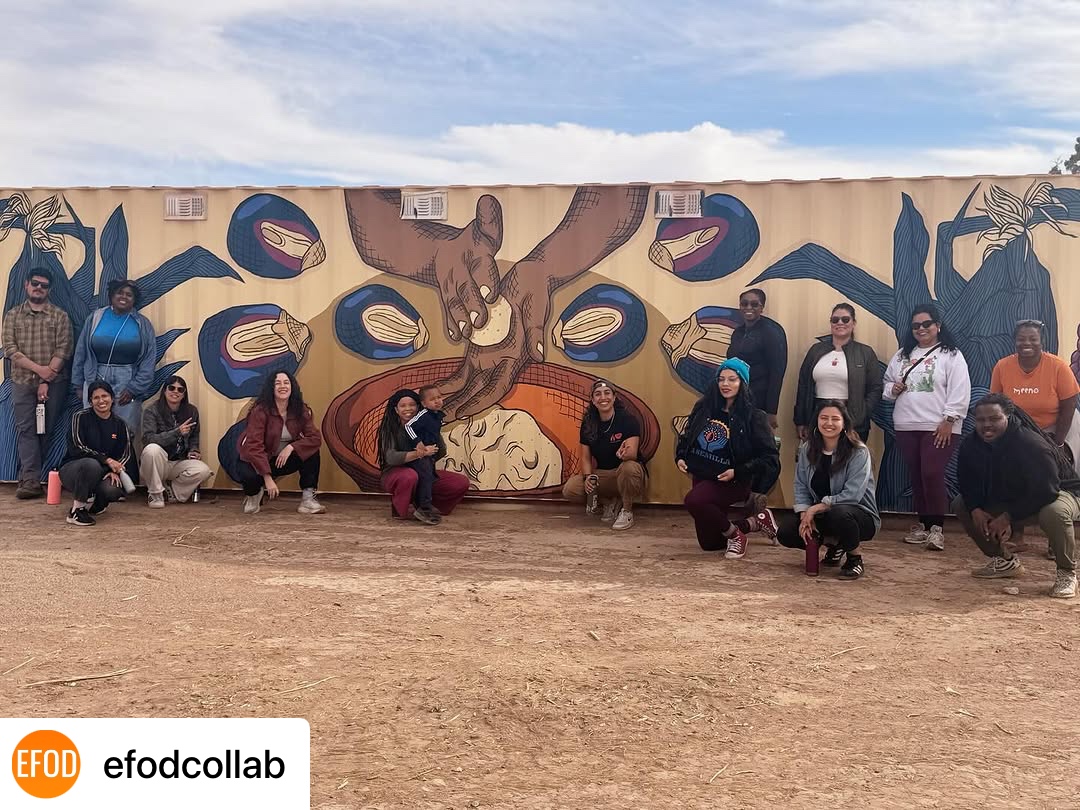
By Mariela Cedeño of Manzanita Capital Collective and Adriana Abizadeh-Barbour of Kensington Corridor Trust
The Waterway Partnership was formed in 2023 by the NoRegrets Initiative and Manzanita Capital Collective to move resources to Black, Indigenous, POC-led & collectively-governed funds working in sustainable and regenerative food and agriculture. This work – intended to center racial and economic justice – grew to include community ownership in land and real estate as a critical tool identified by frontline communities. This piece explores the “why” behind that work, and the organizations named are among those investments.
Those who control the land, control us all.
Land use – i.e. are we growing food that nourishes our communities or depletes the planet? Are we building spaces for community benefit or extraction? – land access, and land value are all determined by land owners. Land in this country is one of the oldest forms of intergenerational wealth accumulation and there are clear linkages between land and home ownership, wealth creation, and the growth of political power. In the United States, 98% of agricultural land owners1 and 75% of the country’s homeowners2 are white, and the racial wealth gap between white and Black households is 6 to 13. Decades of rapid development, gentrification, and disinvestment have left communities of color at risk for displacement, and without affordable options to access or reclaim land and housing. Communities shouldn’t have to wait for land owners or developers to decide their future.
Communities can and do come together to determine how to access, develop, use, and reactivate existing space to benefit the broader neighborhood. Communities can and do have the capacity to steward the land in right relationship. The inhibiting factor to facilitating community land ownership and community-led development is access to reparative capital4 – capital that addresses the historical inequities and injustices inflicted upon communities of color. Because real estate assets are on the market often for a short window, communities are left vulnerable to decision makers outside of our communities with deep pockets and immediate cash offerings. To counter this, community asset building projects require access to integrated capital – patient non-extractive investments and philanthropic dollars – at the pace of the market and in a manner that best serves community needs. For anyone who has worked within or around philanthropy, we know that this is a very present issue. The challenge to catalyzing community ownership of land and real estate does not lie in our preparedness, ability manage land and real estate projects, or to meet market demands5, but rather in wealth holders’ capacity to meet community needs and market pace.
Community owned land and real estate.
Innovative community ownership models are springing up all across the country, and supporting these efforts requires capital that understands the unique challenges they are solving for. Because land and real estate currently sit in a commodity market, and the goals of community based projects are not to maximize profit, we need to re-asses how resources flow that allow for innovation and flexibility. We cannot continue to build wealth off of land and communities; we need to re-orient to protect and preserve localized ownership in the face of rising costs and gentrification pressures. We need capital that allows collective ownership projects to acquire strategic properties before speculative investors do, stabilize affordable commercial spaces for long-time small businesses, maintain permanently affordable housing for local residents, and secure land in perpetuity for community use. BIPOC led organizations are building the future of neighborhoods via collective ownership, they are shifting power and assets from a small set of wealth holders to communities, all the while building the capacity to scale and replicate neighborhood wealth-building efforts. Some of these include:
- Kensington Corridor Trust (KCT): decommodifying land and real estate along a commercial corridor in the Kensington neighborhood of Philadelphia to combat extractive capital and development through collective land ownership. KCT is raising $24M in integrated capital to acquire a 157,000 sq ft anchor mixed use redevelopment with 116 residential units + 26 commercial units.
- Groundcover: community-owned and -controlled real estate in a historically Black neighborhood in Atlanta that places the power in the hands of community residents who can purchase shares of the properties. Groundcover is raising $30M in integrated capital to support pre-development and acquisition of land and properties put into trust.
- EB PREC: community-centered development cooperative that removes homes from the speculative market in Oakland, CA to create permanently affordable, community-controlled homes that are democratically governed by those most disenfranchised. EB PREC is raising $10M in integrated capital to acquire, expand, and activate West Oakland’s historic 7th Street Corridor.
The same pressures that we see in development and housing in urban areas, are taxing land in rural areas, particularly agricultural land. In California, non-agricultural development of farmland is taking ~40,000 acres per year out of the hands of farmers and land stewards6, with the average cost per acre rising 9% in just the last year.7 It is clear that the system is ensuring that land stays in those same hands. Land, in effect, has become commodified to a point that makes it almost impossible for small and BIPOC farmers and land stewards to access affordable and stable land, much less own it. Not to mention, that the land we all stand on, prior to settler commodification, belonged to and was stewarded by indigenous people.
If we truly want to care for people and planet, we need to start resourcing the indigenous land stewards and farmers of color who are feeding us and restoring our relationship with the planet. Communities cannot afford to continue waiting and there is no more room to extract from the land. Land is not a limitless resource. We need to share in the responsibility of ensuring that land remains dedicated to growing food, supporting local farmers, and strengthening regional food systems. To this aim, various collectively stewarded land funds have emerged to ensure that capital is at the ready and directed to BIPOC farmers and land stewards, including:
- National Black Food and Justice Alliance – The Black Land and Power coalition centers on collective vision and strategy to address the urgent need for land retention, protection and recovery through three core strategies: building infrastructure and community land trusts, advancing organizing campaigns for land recovery, and building the Resource Commons to support land retention and expansion through coordinated financial resources. BLP is seeking $5 million dollars to support its revolving loan and forgivable grant fund in support of on-going collective land and resource strategy via cooperatives and community land trusts.
- The People’s Land Fund (PLF): a collaborative of Black, Indigenous, and POC food and agriculture leaders supporting and resourcing the land and infrastructure needs of Black, Indigenous, and POC farmers and land stewards in California. PLF is raising $15M in grants and 0% interest loans to support the just transition of land and resources.
- Persimmon Collective: a practitioner-led mutual aid organization that supports BIPOC farmers and land stewards through funding, technical assistance, and land access in NC, SC, GA and VA. Persimmon Collective is raising $2M in 0% interest loan capital paired with grants to support BIPOC farmer land acquisition.
- Midwest Farmers of Color – Radical Resource & Land Fund: dedicated to supporting BIPOC farmers and land stewards across urban, suburban, and rural communities in the Midwest states, and the Native Nations whose lands this region occupies. RRLF is raising $3M in grants and impact first loans to help farmers of color secure land and infrastructure.
We need to invest in the future we want to see.
These efforts are being led by people of color while they receive fewer grant dollars, have smaller operating budgets, and secure more funds with strings attached in comparison to their white counterparts.8 Despite it, and maybe because of it, these models all have one thing in common: they are working for collective benefit, not for the benefit of the few. They are prioritizing people over profits, and this is challenging in an economy that incentivizes maximizing gains.
Wealth holders can continue to maintain the status quo or meaningfully support a new ecosystem of leaders, models, and collective resources working to advance racial and economic justice. Stolen land has not been returned to indigenous people. Black Americans have not been given reparations. BIPOC folks continue to be shut out of land tenure and stable and affordable housing. Yet, the tools to change this are here, and have been in front of us for generations.
This growing ecosystem of community-controlled real estate projects & land funds are raising millions of dollars each year to make their work possible. Their work depends on partners who believe that long-term community stability requires new forms of investment; capital that is patient, values-aligned, and designed to support community stewardship rather than displacement. They need partners who understand that capital should serve people, not control them. That the heavy lift of confronting market forces cannot be shouldered by them solely. We need to get creative – we need grants, recoverable grants, low-to no cost unsecured investments, program-related investments, and loan guarantees that enable them to acquire and stabilize land properties while maintaining community ownership, governance, and affordability.
The ecosystem needs partners who can contribute gifts and catalytic investments to close critical gaps in acquisition and stabilization efforts. We need to collectively invest in a new model of land and community-controlled development, one where the people that steward the land and live and work in a neighborhood have a permanent stake in its future.
- USDA “Who Owns the Land? Agricultural Land Ownership by Race/Ethnicity: https://ers.usda.gov/sites/default/files/_laserfiche/publications/46984/19353_ra174h_1_.pdf?v=30567 ↩︎
- Drew DeSilver, “As National Eviction Ban Expires, a Look at Who Rents and Who Owns in the U.S.,” Pew Research Center, August 3, 2021, https://www.pewresearch.org/fact-tank/2021/08/02/as-national-eviction-ban-expires-a-look-at-who-rents-and-who-owns-in-the-u-s/.https://www.pewresearch.org/fact-tank/2021/08/02/as-national-eviction-ban-expires-a-look-at-who-rents-and-who-owns-in-the-u-s/ ↩︎
- Greg Rosalsky, “Why the Racial Wealth Gap Is so Hard to Close,” NPR, June 14, 2022, https://www.npr.org/sections/money/2022/06/14/1104660659/why-the-racial-wealth-gap-is-so-hard-to-close. ↩︎
- https://nonprofitquarterly.org/what-is-reparative-capital-and-why-does-it-matter/ ↩︎
- Melissa Hoover and Esteban Kelly, “Future Horizons: Visions Toward Democratizing Our Economy,” Nonprofit Quarterly, August 3, 2022, https://nonprofitquarterly.org/future-horizons-visions-toward-democratizing-our-economy/ ↩︎
- Edward Thompson, Jr., “Agricultural Land Loss and Conservation,” California Department of Food and Agriculture, July 2009, https://www.cdfa.ca.gov/agvision/docs/Agricultural_Loss_and_Conservation.pdf ↩︎
- “Land Values 2021 Summary ,” U.S. Department of Agriculture, August 2021, https://www.nass.usda.gov/Publications/Todays_Reports/reports/land0821.pdf ↩︎
- Jim Rendon, “Nonprofits Led by People of Color Win Less Grant Money With More Strings,” The Chronicle of Philanthropy, May 7, 2020, https://www.philanthropy.com/article/nonprofits-led-by-people-of-color-win-less-grant-money-with-more-strings-study/ ↩︎